Just as shoppers look for locally grown fruits and vegetables, we encourage customers to consider where their wood products come from. Trees harvested for wood are agricultural products, similar to tomatoes or corn.
When purchasing items such as a wooden spoon, cutting board, or dining table, consider asking:
- Where was the wood grown?
- Was it harvested sustainably?
- Was it milled and produced locally?
Our goal is to connect wood producers, artists, artisans, and customers who value sustainably harvested wood from responsibly managed forests in New England. You can find a list of CT-grown forest product suppliers and primary producers within the CT DEEP Division of Forestry directory.
Forests play a vital role in climate mitigation, but two related terms are often confused: carbon sequestration and carbon storage.
Carbon Storage vs. Carbon Sequestration
Carbon sequestration is the active process of trees removing carbon dioxide (CO2) from the atmosphere through photosynthesis. As trees grow, they pull CO2 from the air and convert it into wood, roots, leaves, and soil organic matter. Carbon storage, by contrast, refers to the total amount of carbon currently held within a forest ecosystem, including:
- Tree trunks and branches
- Roots
- Forest understory vegetation
- Dead wood
- Forest soils
When wood from responsibly managed forests is turned into durable products such as lumber, furniture or building materials, much of that carbon remains stored for decades.
- Purchasing locally grown wood products helps support:
- Sustainably managed forests that continue sequestering carbon
- Long-term carbon storage in wood products
- Reduced transportation emissions
- Regional forest-based economies
Our Products
UConn Extension Forestry supplies its own line of CT-grown forest products from the UConn Forest. All products are sourced from responsibly managed forest stands used for research, teaching and demonstration. When you purchase wood from the UConn Forest, you are supporting more than a product, you are supporting hands-on student learning, sustainable forest management and local stewardship. Below you can learn about the wood products we offer.
Lumber from UConn Forest
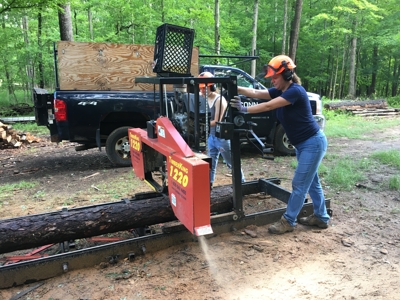
The UConn Forest Crew operates a portable sawmill. When small harvests or salvaged logs become available, we mill lumber for community sale and educational use.
Much of our lumber is dried in a student-designed and built solar-powered dry kiln. We have wood available from the following tree species:
- Black birch
- Red oak
- White oak
- Red maple
- Sugar maple
- American elm
- White ash
- White pine
Pricing: Starts at $1.50 per board foot (base pricing). Wider, higher-grade boards, figured wood, and full-width slabs are priced higher.
Because lumber is milled by students as part of hands-on learning, some boards may include natural imperfections such as minor warping or cracks. These pieces are often well suited for creative woodworking projects.
All lumber sale proceeds support UConn Forest management activities.
Firewood from UConn Forest
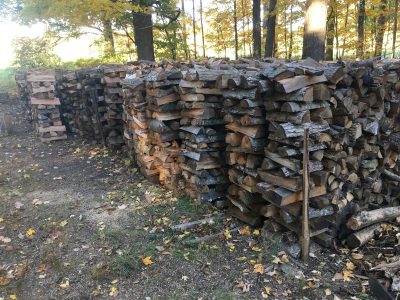
The UConn Forest Crew cuts and splits firewood for seasonal sale.
Pricing: $250 per cord (pickup only, by appointment).
All proceeds support UConn Forest management projects.
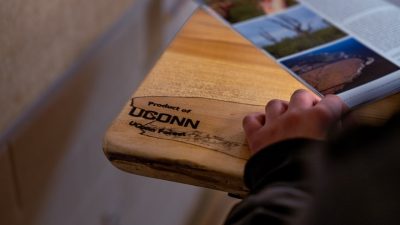
Wood Products from UConn Forest
The UConn Forest Crew also produces:
- Cutting boards
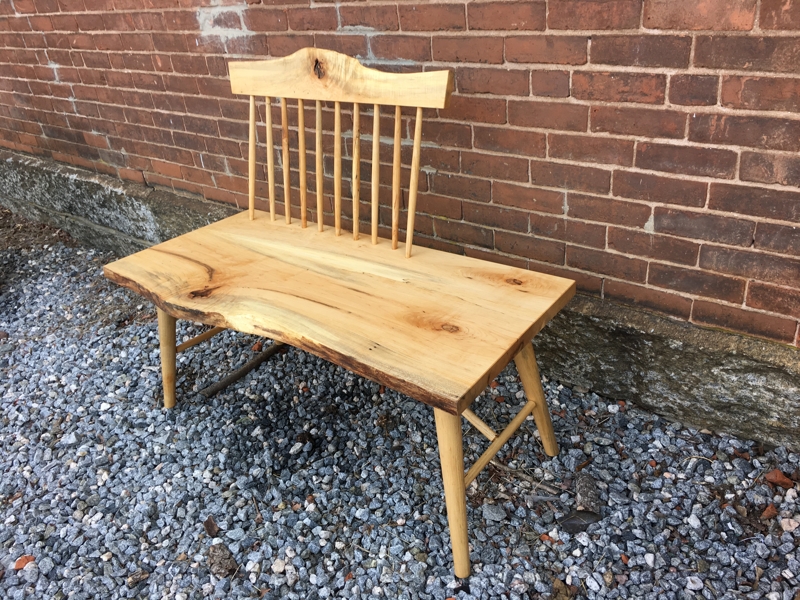
- Benches
- Specialty wood items
- Maple syrup! (Learn about our maple syrup production through this UConn Today article.)
Proceeds support hands-on student learning and forest stewardship.
Urban Wood Utilization Partnerships
In addition to milling lumber from the UConn Forest, UConn Extension Forestry supports community-based urban wood initiatives across CT.
UConn Extension Forestry provided technical assistance to the Keney Park Sustainability Project (KPSP) in establishing their urban wood milling and drying operation in Hartford. This effort demonstrates how trees removed from urban areas can continue providing ecological and community value. Learn about the KPSP urban mill through their website.
Why Urban Wood?
When trees in cities become hazardous, diseased or structurally compromised, removal is sometimes necessary. Traditionally, removed trees are chipped or sent to landfills. Urban wood utilization offers an alternative. By milling and drying salvaged logs locally, communities can:
- Extend the life of carbon stored in wood products
- Reduce landfill waste
- Capture economic value from removed trees
- Create benches, tables, and other products for public spaces
- Strengthen connections between residents and their urban forest
From Removal to Renewal
Urban trees store carbon throughout their lives. When wood is transformed into durable products, that carbon remains stored for decades. Responsible urban forestry includes:
- Managing risk when trees pose safety concerns
- Recovering usable wood whenever feasible
- Replanting to sustain long-term canopy benefits
This “remove, reuse, replant” cycle helps maintain both safety and sustainability in CT communities.
Contact Us
For more information about our products or to receive technical assistance regarding wood production, contact Tom Worthley at thomas.worthley@uconn.edu or call 860-345-4511.