Welcome to the UConn Extension Forestry Blog! We are excited to share UConn Extension Forestry work here. In addition to our own initiatives, we collaborate with many partners on a wide variety of projects from landowners and land managers around Connecticut to researchers and the UConn community here in the UConn forest.

Connecticut Team Competes at National 4-H Forestry Invitational

October 1, 2026

July 23, 2026

Connecticut was among 15 states that competed in the 45th National 4-H Forestry Invitational from Sunday July 20 through Wednesday July 23. Teams from Tennessee, Georgia and Florida placed first, second, and third respectively. Arkansas, Indiana, Kentucky, Louisiana, Mississippi, North Carolina, Pennsylvania, South Carolina, Utah, Virginia, and West Virginia also competed in this year’s Invitational.

The invitational was held at West Virginia University Jackson’s Mill State 4-H Camp and Conference Center near Weston, West Virginia. The event is sponsored by Farm Credit, Green Diamond Resource Company, Virginia Cooperative Extension, West Virginia University Extension, and the Association of Natural Resource Extension Professionals.

While at the Invitational 4-H members competed for overall team and individual awards in several categories. Events included tree identification, tree measurement, compass and pacing, insect and disease identification, topographic map use, forest evaluation, the forestry bowl and a written forestry exam.

The Connecticut team members were Kathryn Baker, Anthony Boggio, Sylva Geiger, Gabe Poll with coach Gino Masi.
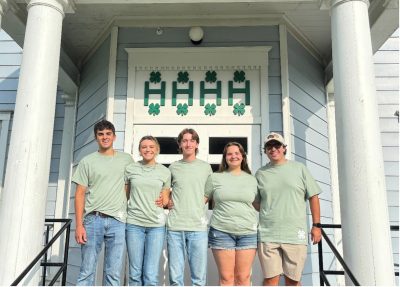
The Connecticut Team! L to R: Gabe Poll, Kathryn Baker, Anthony Boggio, Sylva Geiger, coach Gino Masi

Tennessee’s Aiden McKenzie had the highest overall individual score in the contest.  The second-place individual was Lily Stobb from Georgia and the third-place high individual score was Carver Deaton from West Virginia.

The Joe Yeager “Spirit of the Invitational” award was presented to Forest DeRoy from Florida.  This award recognizes an outstanding 4-H contestant at the Invitational. It is presented to the individual who takes initiative, is enthusiastic, and is eager to lead academic and social situations.

The Tommy and Susan Futral Inspiration of the Invitational Award was presented to Deborah Beisel from Pennsylvania.  Deborah has been a 4-H volunteer leader and coach for many years.  Coaching numerous 4-H forestry teams to the national forestry invitational as a 4-H volunteer.

4-H is a youth education program operated by the Cooperative Extension Service of the U.S. Department of Agriculture, National Institute of Food and Agriculture and the state land grant universities. More than six million youth, 540,000 volunteers, and 3,500 professionals participate in 4-H nationwide, and nearly 100,000 are part of the 4-H Forestry Program.

The event would not be possible without the generous support of our sponsors:

Farm Credit supports rural communities and agriculture with reliable, consistent credit and financial services, today and tomorrow. Farm Credit has been fulfilling its mission of helping these areas grow and thrive for a century by providing farmers with the capital they need to make their businesses successful and by financing vital infrastructure and communication services. Because a steady flow of capital means more jobs and economic growth, Farm Credit is able to invest in the vibrancy of communities throughout rural America. For more information about Farm Credit please visit farmcredit.com.

Green Diamond Resource Company is a privately held forest products company with roots dating back to 1890. Today, the company owns working forest lands in Washington, Oregon, Montana, and California. A subsidiary, Green Diamond Management Company, provides forest management services in the U.S. South and West. All 2.2 million acres owned and/or managed by Green Diamond are independently audited and certified for sustainable forest management. More information about Green Diamond’s environmental leadership may be found at www.greendiamond.com.

The Association of Natural Resource Extension Professionals (ANREP) is a professional society for natural resource Extension professionals. The mission of ANREP is to bring Extension professionals together to discuss mutual natural resource issues, needs, and opportunities and to advance natural resource Extension through continuing education.

Virginia Cooperative Extension was established in 1914 and is a partnership between Virginia’s two land grant universities: Virginia Tech and Virginia State University. Today, Extension operates out of 107 offices, 11 Agricultural Research and Extension centers, and six 4-H centers across the commonwealth. Their agents, specialists, and volunteers work to assist farmers, empower youth, guide responsible resource management, and advance the wellbeing of all Virginians. To learn more about Virginia Cooperative Extension visit www.ext.vt.edu.

West Virginia University (WVU) Extension Service educators and volunteers build and sustain partnerships with people and organizations in West Virginia, to improve their lives and communities. WVU’s programs and services strengthen individuals of all ages.  We develop and teach best practices for sustainable agriculture, for responsible use of renewable resources, and stewardship of natural resources. We work to improve our state’s communities, workforce, and the economy. To find out more about WVU Extension Service visit www.extension.wvu.edu.

For more information on the National 4-H Forestry Invitational, go to: http://4hforestryinvitational.org/.

Contact: William C. Worrell, Virginia Cooperative Extension, Lebanon, VA  24266

(276) 889-8056. bworrell@vt.edu

FACEBOOK: https://www.facebook.com/N4HFI
 

Sugar Season at UConn Once Again

March 12, 2026

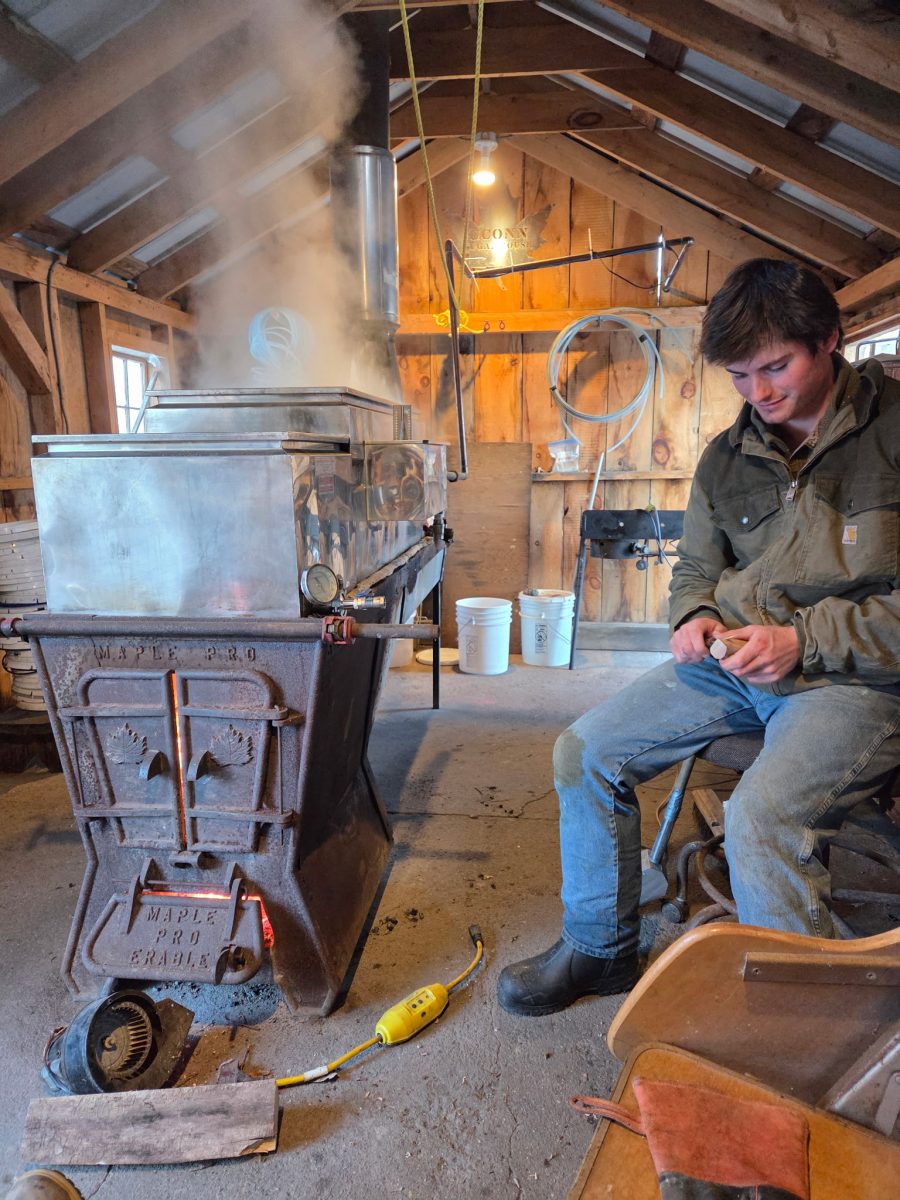
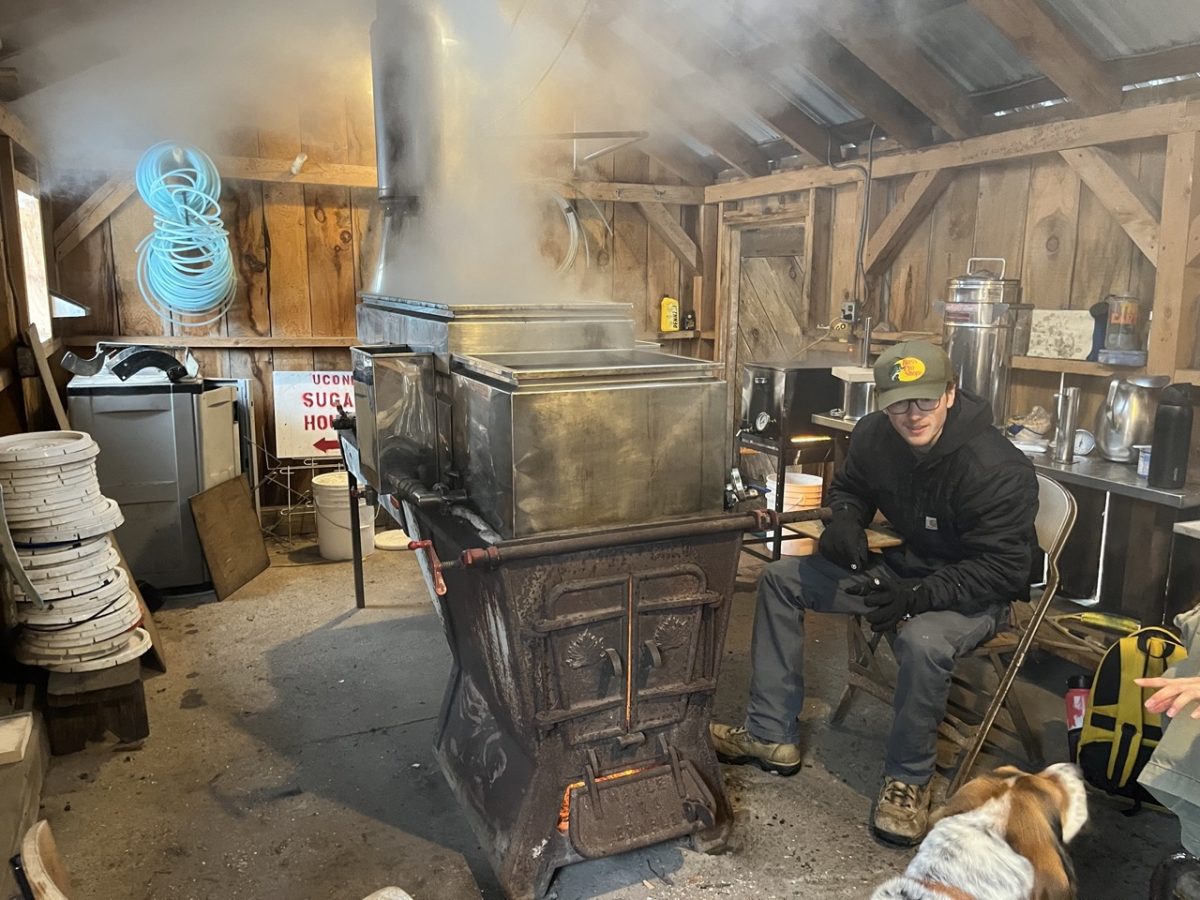
Watching sap boil in the evaporator
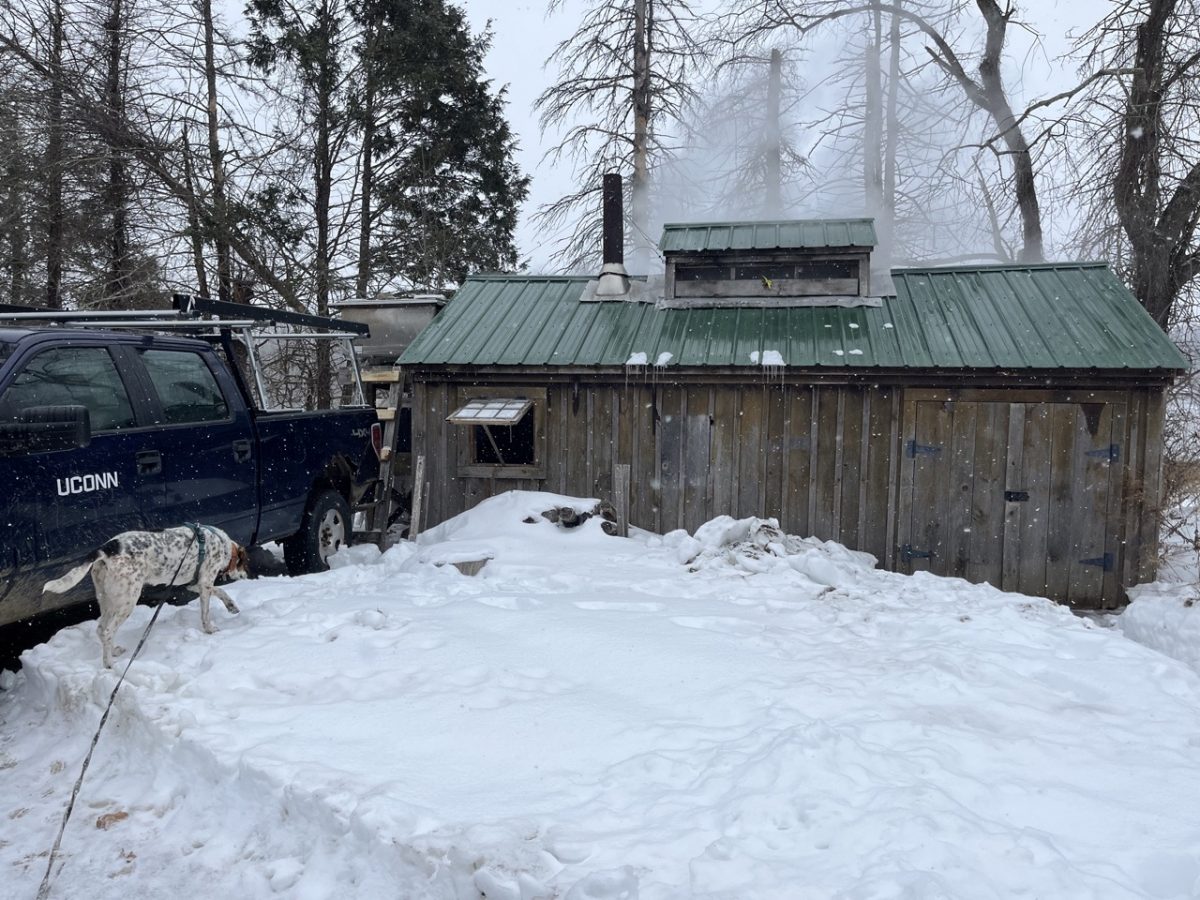
The UConn Sugarhouse
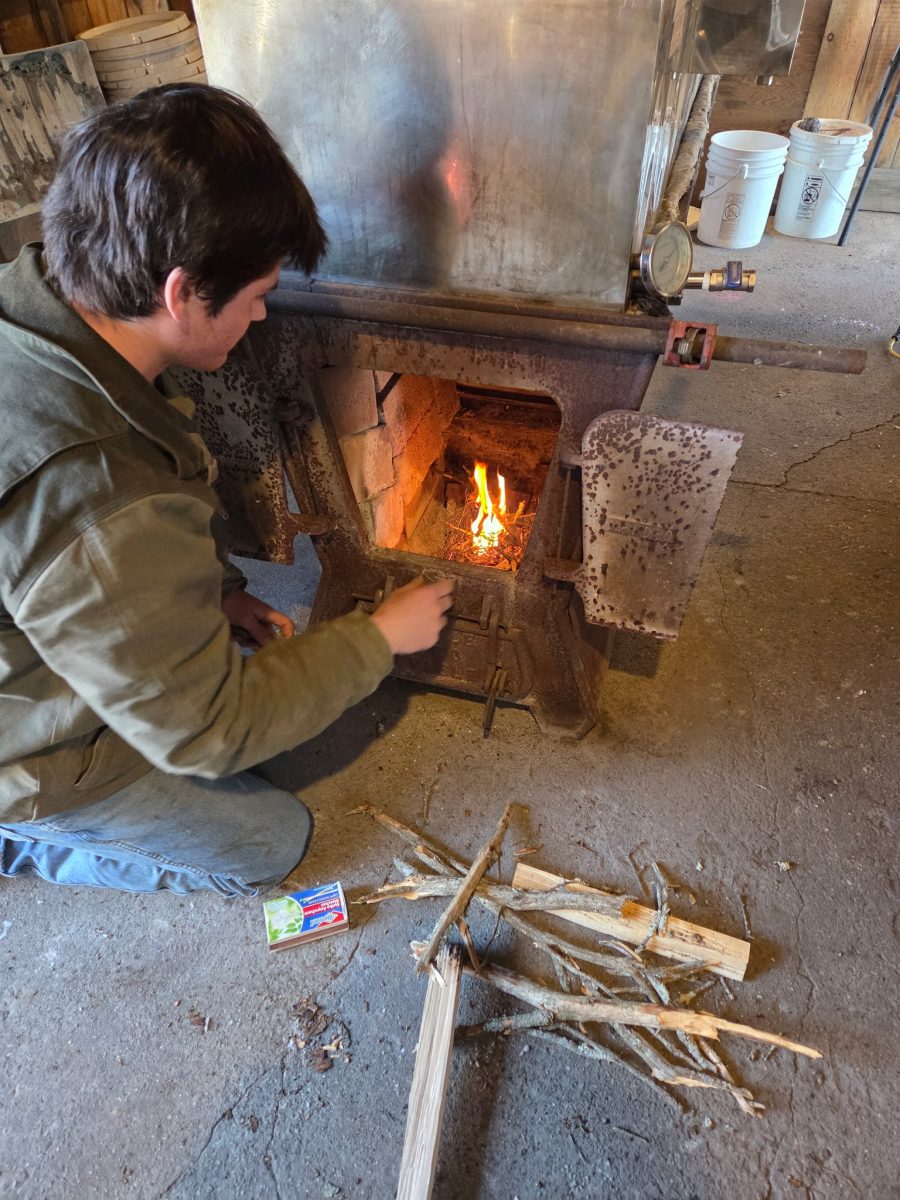
Starting a fire under the evaporator

March, 2026

The UConn Forest Crew is at it again! Maple sugaring, along with maintenance of the sugarbush (the forest stand where we tap sugar maple trees) has fallen to the UConn Forest Crew in recent years, which makes sense because, while sugaring is a maximum of 6 weeks of activity, maintenance of the forest where the sugar maples grow is a year-round consideration. Last summer the crew was out there controlling barberry bushes and repairing sap lines. You can see some of the blue tubing hanging in the back of the sugarhouse. These are the lines that bring the sap from the trees to the collection tank – a vast improvement from the days when we would hang a bucket on each tree. Sugaring season starts when the trees are experiencing sunny days and above freezing temperatures during the day, but it goes back below freezing at night. This drives the sap up and down the tree, and in our case, out into our collection lines.

In CT we’ve been tapping at the end of January, because even if the weather isn’t perfect, we want to be prepared for when the sap starts flowing. This year, however, the end of January was very cold, and we didn’t tap trees until well into February. The Crew ran vinegar through the lines to clean them out, then tapped the trees with the spiles, which allow the sap to run out of the tree and into the lines. As the weather warmed up during the day, the sap starts running into a large collection tank on the downhill side of the sugarbush. The crew picks it up from there and transports it back to the Sugar house.

Inside the sugarhouse is an evaporator – a big fancy pan over a firebox. The sap flows into here and boils forever. It takes 35-50 gallons of sap (depending on the starting sugar content which varies from tree-to-tree, from year-to-year) to boil down into 1 gallon of maple syrup (which has a very specific sugar content.

Here you can see the sugar house from the outside, and various members of this year forest crew patiently watching sap boil on the inside. The steam vents through the roof and the crew keeps and eye on fresh sap flowing in, and the temperature of the boiling sap. It will boil higher and higher as it gets away from being water and closer to being syrup, but we don’t want it to go over the temperature of syrup, because very quickly it will turn to two types of maple candy and then it will turn to pure carbon and be stuck to all of the pans!

Today, a visiting hound dog is inspecting their progress without getting her nose too close to the firebox.

Stay tuned for updates!

Steal From Your Friends!

January 6, 2025

Northeast Forest Resources Extension Council meeting
(NeFREC)

Dec. 3 & 4, Haddam, CT

Every year in early December, extension foresters from the USFS northeast forest service region (MN to the East coast, and south to WV) gather to discuss hot topics and areas of concern in forestry outreach, but most importantly, to steal good ideas from the successful programs of their colleagues! While traditionally held at Grey Towers, the Pennsylvania family home of Gifford Pinchot (chief of the US Forest Service upon its creation) the meeting has roamed since the COVID years. The 2024 meeting was hosted by Tom Worthley, extension forester at UConn, at the Extension Center in Haddam, CT. Many states were represented, some in person and some remote. The following are some highlights shared from various corners of the northeast. (more…)

Maple Sugaring at UConn

January 6, 2021

The maple syrup is not so well-known as UConn’s ice cream… but it should be! At the end of each winter, members of the UConn Forestry and Wildlife Club bring out the taps, buckets, and tubes to collect maple sap. They bring it to the sugar house and boil it down to make syrup. Uconn has a few stands of forest dominated by sugar maples (Acer saccharum), and we call these “sugarbushes”. Sap is collected on these locations, boiled down at UConn’s own sugar house for teaching others about the process, and of course for the production of delicious forest products! If you happen to catch our syrup for sale at a CAHNR pop up shop or other event, know that all the proceeds go back into the stewardship of the UConn forest.

(more…)

Position on Forests, Carbon and Climate Change: Yankee SAF

December 1, 2020

The following document was prepared by the Yankee Division of the Society of American Foresters (SAF) in 2020, in response to public sentiment and misinformation suggesting that the cutting of trees was not in keeping with goals of mitigating climate change and sequestering/storing terrestrial carbon. Sounds forestry practices are in fact some of the best tools we have to maintain healthy forests and their function as mitigators of the impacts of climate change and collectors of carbon. It is also the means by which we can preserve biodiversity and provide sustainable and renewable products (timber, maple syrup, etc.) while also meeting carbon and climate goals.

The entirety of SAF has gone on to adopt similar positions, as collected on their website. (more…)

The Slow Storm

January 1, 2019

The Slow Storm: Tree and Stand Mortality in CT during 2018 from drought, insects and diseases.

by Thomas E Worthley, UConn Associate Extension Professor, Forestry

During the last decade most tree-related front-page-newsworthy stories resulted from disruptions related to severe storm events that caused power outages, transportation disruptions and property damage that folks will long remember. Such events are sudden and dramatic, are certainly newsworthy and result in visible changes in our landscapes and neighborhoods. Less sudden and dramatic, but perhaps more intensively and extensively altering our wooded landscapes visibly and ecologically, is the slow and relentless “perfect storm” of weather patterns, invasive insects and opportunistic pathogens the last few years causing severe and extensive tree mortality, most noticeably in eastern CT. We are witnessing a landscape-scale change in forest species composition, age structure and stand condition such as not been experienced in a generation. (more…)